Driveway Paving Cost in Texas: Full Breakdown
House Escort Team
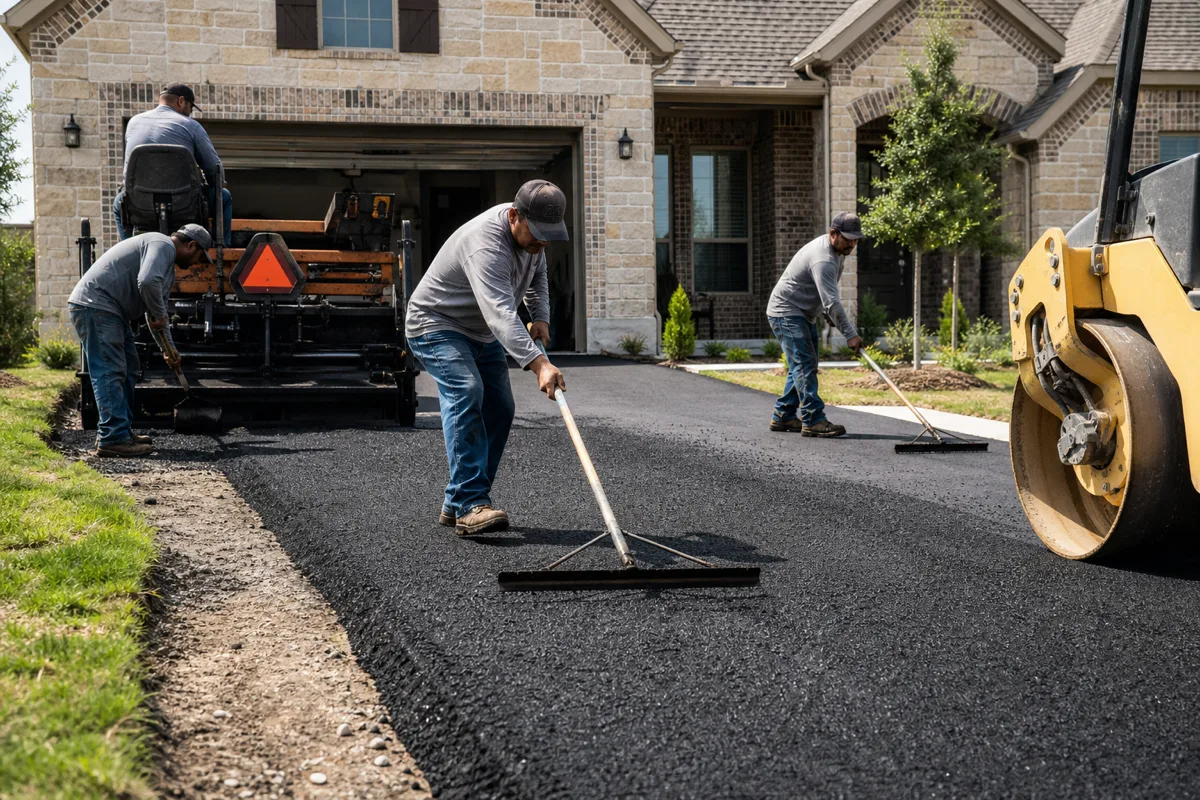
Your driveway takes a beating in Texas — hot sun, freeze-thaw cycles in northern Texas, heavy rainstorms, and decades of use. When it’s time to repave or install a new driveway, knowing what to expect helps you budget accurately and choose the right material for your situation.
Here’s a complete breakdown of driveway paving costs in Texas.
Driveway Paving Cost in Texas by Material
Asphalt Driveway
Cost range: $3–$7 per square foot installed Typical 1,000 sq ft driveway: $3,000–$7,000
Asphalt is the least expensive paving option but requires sealcoating every 3–5 years in Texas heat. It’s softer in extreme heat (can dimple under heavy vehicles in summer), and has a typical lifespan of 15–30 years with maintenance.
Concrete Driveway
Cost range: $6–$12 per square foot installed Typical 1,000 sq ft driveway: $6,000–$12,000
Concrete is the dominant choice for Texas residential driveways. It handles heat better than asphalt, requires minimal maintenance, and lasts 30–50+ years. Decorative options (stamped, exposed aggregate, colored) add $2–$5/sq ft to base concrete pricing.
Gravel/Crushed Limestone
Cost range: $1–$3 per square foot installed Typical 1,000 sq ft driveway: $1,000–$3,000
Common on rural Texas properties and long country driveways. Low initial cost, but requires periodic regrading and addition of material over time.
Pavers (Brick, Concrete, or Natural Stone)
Cost range: $10–$25+ per square foot installed Typical 1,000 sq ft driveway: $10,000–$25,000+
Premium aesthetic option — highly durable, individual pavers can be replaced if damaged, and they add significant curb appeal value. Popular in higher-end Texas neighborhoods.
Tar and Chip (Chip Seal)
Cost range: $3–$5 per square foot installed Typical 1,000 sq ft driveway: $3,000–$5,000
Midpoint between asphalt and gravel aesthetically. Less common in Texas urban areas.
What Drives Driveway Paving Cost in Texas
Square footage: The single biggest cost driver. Measure your driveway carefully — a 1,200 sq ft driveway vs. a 600 sq ft driveway doubles material and labor costs.
Existing surface removal: Tearing out an old concrete or asphalt driveway adds $1–$2/sq ft to total project cost. This often surprises homeowners who didn’t budget for demolition and disposal.
Base preparation: Proper compacted base material is critical in Texas — especially in areas with expansive clay soils (common in DFW and Central Texas). Skimping on base preparation causes cracking. Expect base gravel cost of $0.50–$1.50/sq ft on top of paving costs.
Drainage considerations: Texas receives intense rainstorms. Poor drainage design leads to flooding, erosion, and premature pavement failure. A properly graded driveway with drainage planning may cost more upfront but avoids costly repairs.
Access and site conditions: Difficult access (narrow gates, steep grades, distance from street) increases contractor time and equipment cost.
Texas Soil and Climate Considerations
Expansive clay soils: Common in DFW, Waco, and Central Texas. Clay soils shrink and expand significantly with moisture changes, causing concrete to crack without adequate thickness (4–5 inches minimum) and proper expansion joints. This is why Texas driveways crack more frequently than in other regions.
Heat effects on asphalt: During peak Texas summers (100°F+), asphalt can soften enough to leave impressions under vehicle tires, jack stands, or outdoor furniture. This is normal and worsens with thinner or older installations.
Drainage requirements: Most Texas municipalities have requirements about how driveway drainage water is managed relative to neighboring properties and streets. Confirm local requirements before construction.
Getting Quotes in Texas
Get 3 quotes from licensed contractors. Ask each:
- What thickness will you pour? (Concrete should be minimum 4 inches for residential driveways, 5+ for heavier loads)
- What base preparation are you including?
- What’s the warranty on labor and material?
- Who handles permits (if required by your city)?
Find vetted Texas paving contractors at House Escort.
Also read: DFW home improvement permit guide to understand when your driveway project needs a permit.
FAQ
How long does a concrete driveway last in Texas?
A properly installed concrete driveway in Texas — adequate thickness (4–5 inches), well-prepared base, properly spaced control joints — typically lasts 30–50 years with minimal maintenance. Skimping on thickness or base preparation dramatically reduces lifespan, especially in areas with expansive clay soils.
Is asphalt or concrete better for Texas driveways?
Concrete is generally the better choice for Texas residential driveways because it handles heat better, requires less maintenance, and lasts significantly longer. The higher initial cost of concrete is typically offset by lower lifecycle costs. Asphalt makes more economic sense for long rural driveways where concrete cost would be prohibitive.
Do I need a permit for a new driveway in Texas?
It depends on your city. Most Texas municipalities require a permit for new driveways and for significant driveway widening, particularly where the driveway connects to a public street. Check with your city’s public works or permits department before starting. Your paving contractor should know local requirements.
Why do driveways crack so much in Texas?
Texas’s expansive clay soils are the primary culprit — they shrink during dry periods and expand when wet, creating movement under the slab. Thermal expansion in extreme Texas heat also stresses concrete. Proper base preparation, adequate concrete thickness (4–5 inches minimum), and properly spaced control joints significantly reduce cracking.
How do I get the best driveway paving quote in Texas?
Get at least 3 detailed written quotes specifying the same material, thickness, base preparation, and scope. Be wary of unusually low bids — they often reflect shortcuts in base prep or material thickness that cause premature failure. Check contractor reviews and ask for references from jobs 3–5 years old to evaluate how their work has held up.