Deck Staining Cost in Texas: 2026 Pricing Guide
House Escort Team
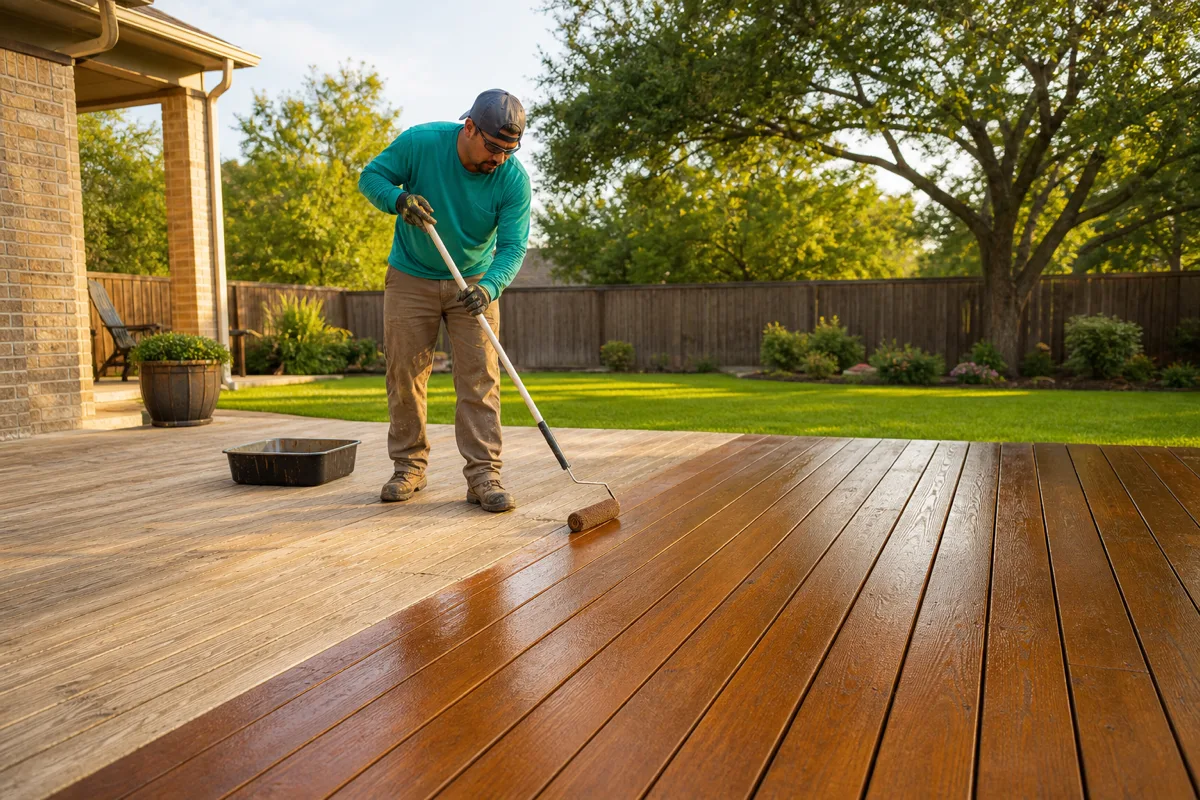
Texas heat, humidity, and UV exposure are hard on wood decks. A properly stained deck lasts years longer than an untreated one — and regular staining costs far less than replacing boards prematurely. Here’s what Texas homeowners should expect to pay for professional deck staining in 2026.
Average Deck Staining Cost in Texas
Professional deck staining in Texas typically runs $1.00-$3.50 per square foot for labor, plus material costs. A standard 300-400 sq ft deck (a common size for Texas homes) costs:
| Deck Size | Low Estimate | Mid Range | High End |
|---|---|---|---|
| 200 sq ft (small) | $350 | $500 | $700 |
| 300 sq ft (medium) | $500 | $750 | $1,000 |
| 400 sq ft (large) | $650 | $1,000 | $1,400 |
| 600 sq ft (XL) | $900 | $1,400 | $2,000 |
What affects where you fall in the range:
- Deck condition: New wood that’s lightly weathered costs less to prep. Heavily weathered, grayed, or dirty wood requires more cleaning and prep — adding cost.
- Stain type: Semi-transparent stains are easier to apply (1-2 coats) than solid stains (which may need primer + 2 coats). Solid stain jobs cost 20-40% more than semi-transparent.
- Railings and spindles: Railings are labor-intensive. A deck with elaborate spindle railings on all sides can double labor time.
- Deck material: Pressure-treated pine, cedar, and redwood accept stain differently. Composite decking (Trex, TimberTech) typically cannot be stained — it needs composite-specific cleaners/sealers.
- Multi-level decks: Each additional level adds access complexity and labor time.
Types of Deck Stain and What They Cost
Transparent/clear sealers: Show natural wood grain, minimal UV protection. Best for new premium wood (cedar, redwood). Stain cost: $20-40/gallon. Need reapplication every 1-2 years in Texas.
Semi-transparent stains: Add color while showing grain. Most popular choice for pressure-treated decks. Stain cost: $30-55/gallon. Reapply every 2-3 years.
Semi-solid stains: More pigment, more UV/moisture protection. Grain shows through partially. Good for moderately weathered wood. Stain cost: $35-60/gallon.
Solid/opaque stains: Maximum protection, no grain visible. Best for older or damaged wood. Acts more like paint. Stain cost: $40-65/gallon. Hides imperfections but harder to recoat — once solid, you’re in the solid stain cycle.
Texas recommendation: Given Texas’s intense UV index (one of the highest in the contiguous U.S.), semi-transparent or semi-solid stains with UV blockers outperform clear sealers significantly. In Houston and South Texas especially, moisture resistance is equally important.
Prep Work: The Most Underestimated Cost
Quality staining is 70% prep. A common reason deck stains fail prematurely: inadequate preparation before application.
Standard prep includes:
- Cleaning: Power washing or deck-specific cleaner (brightener/oxalic acid) to remove dirt, mildew, and oxidation. Brightener opens wood grain for better penetration.
- Sanding: If previous stain is peeling or rough spots present, light sanding between cleaning and staining.
- Repairs: Replacing cracked or split boards, renailing raised nails, tightening loose spindles.
- Taping/covering: Protecting siding, concrete, and landscaping from stain overspray.
If a quote doesn’t mention prep, ask specifically. A cheap job that skips cleaning will peel within 6-12 months in Texas conditions.
How Often Should You Stain a Texas Deck?
Texas’s climate is demanding on deck finishes:
- Clear/transparent sealers: Every 1-2 years
- Semi-transparent stains: Every 2-3 years
- Solid stains: Every 3-5 years (longer cycle, but harder to recoat)
A simple test: Sprinkle water on the deck surface. If it beads and runs off, the sealer is still working. If it soaks in, it’s time to stain. In Houston’s humidity, moisture protection is particularly important for preventing mold and rot.
DIY vs. Hiring a Pro
DIY costs: Stain ($30-60/gallon × 3-5 gallons = $90-300), cleaner ($20-40), brushes/rollers ($20-40), tape/plastic ($10-20). Total DIY materials: $140-400. Add your time — a 400 sq ft deck with prep typically takes a homeowner a full weekend.
DIY risks:
- Uneven application, lap marks
- Choosing wrong stain for your deck type
- Inadequate prep leading to early failure
- Pressure washer damage if pressure is too high
When to hire a pro: Multi-level decks, decks with railings, older wood requiring careful prep, or if you simply don’t want to spend a weekend on it. Pros with proper equipment (airless sprayers, commercial deck cleaners) can produce more uniform results.
Finding a reliable deck staining pro: Look for contractors who describe their prep process in the quote, not just the application. Get 2-3 quotes. House Escort connects you with local exterior painting and deck maintenance professionals — free for homeowners.
Frequently Asked Questions
How long does deck staining take in Texas?
A professional crew can typically clean, prep, and stain a 300-400 sq ft deck in one day (two visits: day 1 cleaning, day 2 staining after the deck dries). Larger decks or decks requiring significant prep work take longer. After staining, allow 24-48 hours drying time before heavy use; full cure takes 72-96 hours.
Can I stain my deck in Texas summer heat?
Timing matters. Stain should be applied when the deck surface temperature is below 90°F and no rain is forecast for 24-48 hours. In Texas summer, this means early morning starts (before 10am) or working in spring/fall. Staining on a surface above 90°F causes the stain to dry too fast, reducing penetration and creating lap marks.
What’s the best deck stain for Texas weather?
Look for stains specifically rated for high UV exposure and moisture resistance. Defy, TWP (Total Wood Preservative), and Armstrong Clark are frequently cited by contractors for their durability in Southern climates. Solid stains from major paint brands (Sherwin-Williams SuperDeck, Benjamin Moore Arborcoat) are good for older or higher-maintenance decks. Ask your contractor what they recommend for your specific wood type and condition.
Should I strip old stain before reapplication?
If the old stain is peeling or in poor condition, stripping is necessary before recoating. A deck stripper removes failed finish layers so new stain can penetrate properly. Stripping adds cost ($0.50-1.50/sq ft) but is necessary to avoid staining over a failing base. If old stain is in decent condition (faded but not peeling), cleaning and brightening is often sufficient before recoating.
How do I find a reliable deck staining contractor in Texas?
Look for pros with deck-specific experience — many painters do decks as add-on work. Ask for references from similar projects, verify they use quality stains (not hardware store bargain brands), and confirm their prep process includes cleaning and brightening. House Escort has local exterior pros who maintain deck care as part of their service offering — browse and connect for free at houseescort.com.