Deck Painting vs Staining for Texas Homeowners
House Escort Team
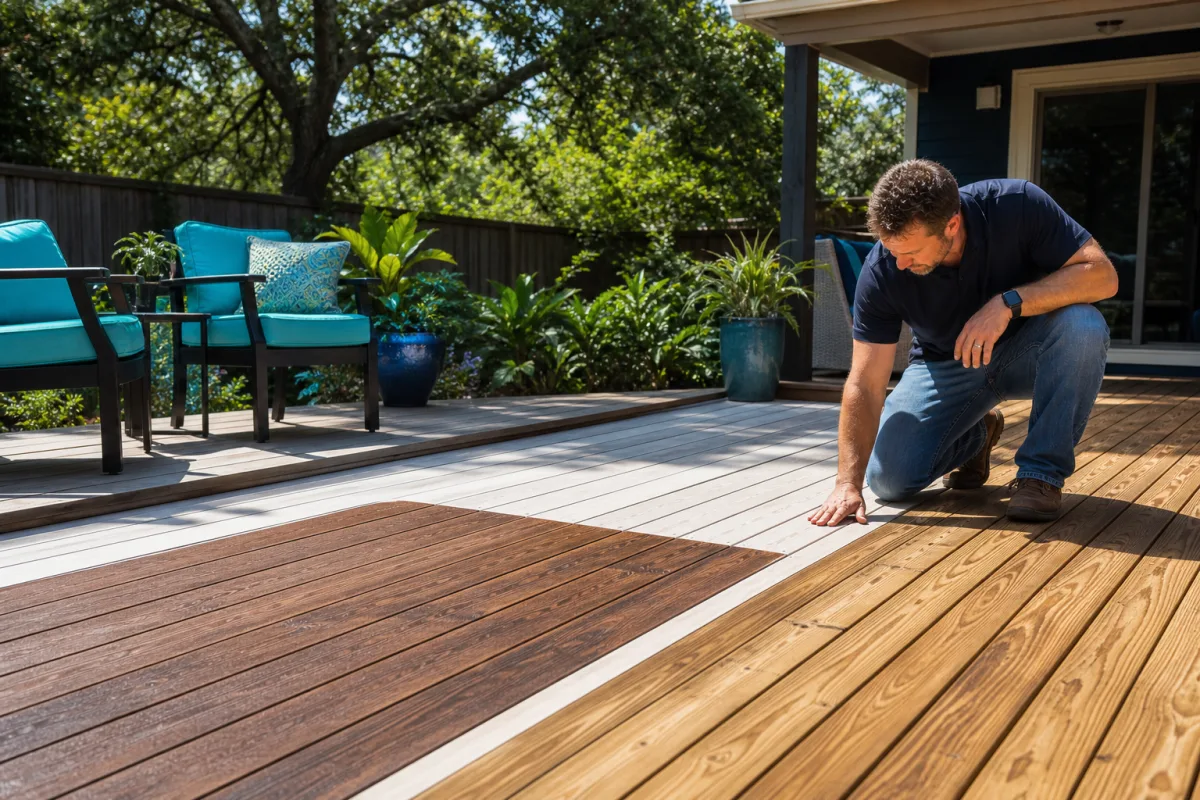
Texas decks endure intense sun, heat, and occasional storms. Choosing between paint and stain determines how often you will maintain the surface and how it will look years from now. Both finishes protect wood, yet they perform differently under relentless UV exposure and temperature swings. Understanding the trade-offs helps you select the right option for your lifestyle and budget.
Paint Offers More Color Options and Hides Imperfections
Paint forms a film on the wood surface. It delivers solid, opaque color that can match house trim or create bold design statements. Paint also conceals nail holes, cracks, and uneven grain, giving older decks a fresh appearance.
However, paint does not penetrate the wood. It sits on top and is more prone to peeling, cracking, and blistering when moisture moves through the deck boards. Texas heat accelerates expansion and contraction, stressing the paint film.
Stain Penetrates Wood and Shows Natural Grain
Stain soaks into the wood fibers rather than coating the surface. It preserves the natural texture and grain while adding color or protection. Many homeowners prefer the matte, natural look that improves with age rather than fighting it.
Because stain penetrates, it moves with the wood instead of fighting against it. This flexibility reduces peeling in Texas climate extremes. Maintenance typically involves cleaning and a maintenance coat rather than full stripping.
Texas UV and Heat Considerations
Intense Texas sunlight breaks down finish binders and fades pigments quickly. Both paint and stain benefit from UV inhibitors, but stain generally requires more frequent reapplication in full-sun exposures. South- and west-facing decks may need attention every 18-24 months.
Dark colors absorb more heat, which can make deck boards uncomfortably hot for bare feet. Lighter stains or paints with reflective pigments stay cooler. Consider foot traffic patterns when selecting shades.
Cost Comparison: Paint vs Stain
Professional deck painting typically costs $2.00 to $5.00 per square foot including prep, primer, and two finish coats. Staining ranges from $1.50 to $4.00 per square foot because it requires less surface film build and often fewer coats.
Material costs favor stain, but labor for proper prep remains similar. Solid-color stains fall between paint and semi-transparent options in both price and durability. Always request itemized bids that separate prep from finish application.
Preparation Requirements Determine Longevity
Both finishes fail prematurely without thorough prep. Power washing removes dirt, mildew, and loose fibers. Scraping and sanding eliminate failed previous coatings. Replacing rotten boards and resetting popped nails prevents future problems.
Paint demands the most preparation. Any remaining gloss or chalk must be removed, and bare wood usually requires a quality primer. Stain tolerates slightly less perfect surfaces because it penetrates rather than films.
Allow adequate drying time between steps. Texas humidity and sudden afternoon storms can extend project timelines. Professional crews plan around weather forecasts.
Solid vs Semi-Transparent Stain
Solid stains behave more like thin paint. They provide excellent UV protection and hide grain while still allowing some wood movement. Semi-transparent stains reveal more wood character and require more frequent maintenance but deliver a lighter, more natural appearance.
Many Texas decks receive a solid stain on horizontal surfaces for durability and a semi-transparent stain on vertical posts and railings for visual interest. Discuss design goals with your contractor before choosing.
How Often to Recoat in Texas Climate
Painted decks often need full repainting every 3-5 years depending on exposure and prep quality. Stained decks usually receive a maintenance coat every 2-3 years. Skipping maintenance coats leads to deeper damage and more expensive restoration later.
Track recoat dates on your calendar or with a simple photo log. Early intervention keeps costs low and prevents water intrusion that rots deck framing.
Choosing the Right Finish for Your Situation
New pressure-treated decks often accept stain immediately after construction. Older decks with existing paint may require stripping before staining or benefit from another paint system. Consult a pro who can evaluate the current condition and recommend the lowest-maintenance path forward.
Homeowners planning to sell within a few years may prefer paint for maximum curb appeal. Those staying long-term often choose stain for easier ongoing care.
For related home maintenance decisions, explore our guide on Texas attic insulation types that also affect energy efficiency and comfort.
Learn the cost factors for other exterior services in our air duct cleaning cost Texas resource.
Frequently Asked Questions
Can I paint over existing stain or stain over paint?
Painting over stain is possible but requires thorough cleaning and often a bonding primer. Staining over paint is rarely successful because the stain cannot penetrate the existing film. Test small areas or consult a professional before committing to either approach.
Does deck staining require more frequent maintenance in Texas?
Yes. UV intensity and heat cause faster fading and erosion of stain. Plan on maintenance coats every two years for south- and west-facing decks. North-facing or shaded decks may last three years between coats.
Is professional prep worth the extra cost?
Proper prep prevents peeling and extends finish life by years. Skipping steps to save money usually results in earlier failure and higher total cost. Professional crews have the equipment and experience to complete prep efficiently.
Which finish resists mildew better in humid Texas areas?
Both paint and stain can be formulated with mildewcides. Stain generally performs better because it does not trap moisture against the wood surface. Choose products labeled for exterior use in high-humidity climates.
Can I apply finish myself or should I hire a pro?
DIY is feasible for small decks with good access and proper safety equipment. Larger or multi-level decks, lead paint concerns, or time constraints favor professional application. Pros also carry insurance that protects you if accidents occur.
House Escort matches Texas homeowners with experienced deck finishing contractors who understand local climate demands. Get matched with pros who deliver lasting results on your outdoor living space.