Deck Building Cost in Texas: 2026 Guide
House Escort Team
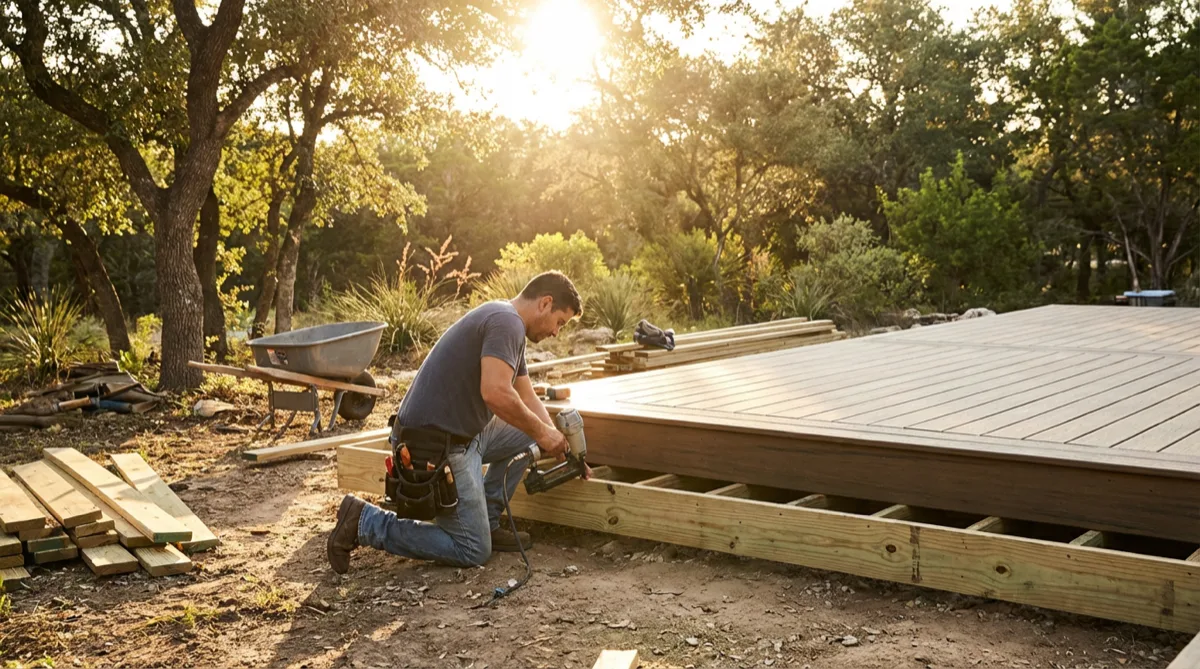
Texas homeowners love outdoor living — and a well-built deck adds significant value to your home while expanding usable living space for the 7+ months of outdoor weather the state’s climate allows. Deck building costs in Texas vary significantly based on material choice, size, complexity, and which market you’re in.
This guide gives you realistic 2026 pricing across material types, size categories, and Texas cities, along with the permit requirements you need to know before breaking ground.
Average Deck Building Cost in Texas
Deck costs are typically quoted as a cost-per-square-foot for materials and labor combined.
Cost by Material Type
| Material | Cost per Sq Ft (installed) | Lifespan | Maintenance |
|---|---|---|---|
| Pressure-treated pine | $15–$28 | 15–25 years | Annual sealing, staining |
| Cedar / redwood | $25–$40 | 20–30 years | Periodic sealing |
| Composite (mid-grade) | $35–$55 | 25–30 years | Minimal |
| Composite (premium) | $50–$75 | 30–50 years | Minimal |
| Hardwood (ipe, tigerwood) | $45–$80 | 25–50 years | Periodic oiling |
| Aluminum | $50–$90 | 30–50 years | Virtually none |
Cost by Deck Size
| Deck Size | Pressure-Treated | Mid-Grade Composite | Premium Composite |
|---|---|---|---|
| 10×12 (120 sq ft) | $1,800–$3,360 | $4,200–$6,600 | $6,000–$9,000 |
| 12×16 (192 sq ft) | $2,880–$5,376 | $6,720–$10,560 | $9,600–$14,400 |
| 16×20 (320 sq ft) | $4,800–$8,960 | $11,200–$17,600 | $16,000–$24,000 |
| 20×24 (480 sq ft) | $7,200–$13,440 | $16,800–$26,400 | $24,000–$36,000 |
These ranges include materials and standard installation labor. Elevated decks, multi-level designs, stairs, built-in seating, pergolas, and lighting add to cost.
What Affects Deck Cost in Texas
Elevation: A ground-level deck that sits 12–18 inches off the ground is straightforward. An elevated deck (second story or over a sloped yard) requires significantly more structural support — ledger boards, concrete footings, posts, and beams. Elevation adds 20–50% to material and labor costs.
Features and add-ons:
- Stairs: $800–$2,500 depending on length and material
- Pergola or shade structure: $3,000–$12,000
- Built-in benches/planters: $500–$3,000
- Lighting (solar or wired): $500–$3,500
- Screened enclosure: $5,000–$15,000 (valuable in buggy Central/East Texas)
- Outdoor kitchen rough-in: $1,500–$5,000
Texas-specific factors:
- Sun and UV: Texas’s intense UV degrades unsealed wood and lower-grade composites faster than in cooler climates. Premium composite or hardwood perform significantly better over a Texas deck’s lifespan.
- Heat absorption: Darker composite colors and metal fasteners on a south-facing Texas deck can get uncomfortably hot in August. Light or variegated composite colors absorb less heat; this is a real consideration for barefoot outdoor living.
- Termites: East Texas and Gulf Coast areas have significant termite pressure. Pressure-treated wood with proper ground contact ratings (UC4B for posts in ground contact) is essential; composite decking eliminates wood termite vulnerability above grade.
Metro pricing:
- Houston: $20–$65/sq ft installed (higher labor due to concentration of demand)
- Austin: $22–$70/sq ft (elevated demand from construction boom)
- Dallas/Fort Worth: $18–$60/sq ft
- San Antonio: $16–$55/sq ft
Permit Requirements in Texas
Most Texas municipalities require a building permit for decks above a certain size or height. Requirements vary by city:
- City of Houston: Permits required for decks attached to the house or over 30 inches above grade. Unattached ground-level decks under 200 sq ft may not require a permit — verify with Houston Permitting Center.
- Austin: Permit required for most attached decks and any deck over 200 sq ft or 30 inches off grade.
- Dallas: Permit required for attached decks and elevated structures.
A licensed contractor in Texas pulls the required permits as part of their service. If a contractor tells you permits aren’t needed for a job that clearly requires them, that’s a red flag. Unpermitted decks can create problems when selling your home.
For a full overview of Texas renovation permits, see our Permit Requirements for Home Renovations in Texas guide.
Wood vs. Composite: What Makes Sense in Texas
For Texas specifically, composite decking makes stronger financial sense than in cooler climates:
Wood: Lower upfront cost, but requires annual or biannual sealing and staining in Texas’s harsh UV environment. Unsealed pressure-treated pine grays out and checks (surface cracking) within 2–3 years in direct Texas sun. Total maintenance cost over 15 years for a 320 sq ft deck: $2,000–$4,000 in products and labor.
Composite: Higher upfront cost but essentially maintenance-free beyond periodic cleaning. Composite doesn’t check, splinter, or require sealing. For homeowners who want a deck they can enjoy without ongoing maintenance, composite pays for itself over a 10–15 year period in Texas conditions.
If you’re planning to sell within 3–5 years, pressure-treated gives you deck presence without maximizing the investment. If you’re staying 10+ years, composite or hardwood is the financially sound choice for Texas conditions.
How to Hire a Deck Builder in Texas
- Licensed contractor: In Texas, most deck construction requires a licensed residential contractor. Verify licensing at license.tdlr.texas.gov or check the Texas State License Board for Contractors.
- Permit pulling: Your contractor should pull all required permits. Never hire someone who suggests skipping permits to reduce cost.
- Written contract: Scope, materials (brand, species, grade), square footage, timeline, payment schedule. Don’t pay more than 30% upfront.
- Get 2–3 bids: Decks have meaningful price variation. Three bids gives you a market check and often reveals the outlier (both overpriced and suspiciously cheap).
Find licensed deck builders in Texas through House Escort — free for homeowners, vetted professionals, no markups.
Frequently Asked Questions
What’s the best deck material for Texas heat and sun?
For Texas conditions, mid-grade to premium composite or tropical hardwood (ipe, garapa) performs best long-term. Composite resists UV degradation and doesn’t require sealing. Ipe naturally resists insects, rot, and UV but requires periodic oiling. Pressure-treated pine is the most affordable but requires consistent maintenance to look good under Texas sun. Avoid low-grade composites — they can fade, warp, and chalk in sustained UV exposure.
How long does it take to build a deck in Texas?
A standard 300–400 sq ft attached deck takes 3–7 days for an experienced crew from footings to final decking. Permit approval (1–2 weeks in most Texas cities) and materials lead time (1–3 weeks for composite) add to the total timeline. Plan for 3–6 weeks from contractor hire to usable deck. Summer construction in Texas often runs on morning schedules to avoid afternoon heat.
Do I need a permit for a small deck in Texas?
It depends on your city and the deck’s size, attachment, and height. Many Texas cities require permits for decks attached to the home, regardless of size, and for any elevated deck over 30 inches above grade. Ground-level floating decks under 200 sq ft may not require a permit in some jurisdictions. Always verify with your city’s permitting office — a $100 permit fee is far cheaper than issues at home sale.
What’s the return on investment for a deck in Texas?
According to Remodeling Magazine’s Cost vs. Value report, a wood deck addition returns approximately 65–75% of its cost in home value at resale. Composite decks return slightly less in percentage terms but require no maintenance discounting. In Texas where outdoor living is central to lifestyle value, a well-built deck tends to perform at the higher end of ROI estimates. Buyers in Austin, Houston, and DFW consistently value outdoor living space.
Can I DIY a deck in Texas to save money?
Basic ground-level decks are within the skill range of experienced DIYers. However, Texas municipalities require licensed contractors for permitted work in most cases. Even for unpermitted situations, deck framing requires knowledge of load paths, ledger attachment (waterproofing and lag bolt spacing), joist sizing, and decking fastening. For elevated decks or anything attached to your house, hiring a licensed contractor is strongly recommended.