Build a Contractor Website That Generates Leads
House Escort Team
Build a Contractor Website That Generates Leads
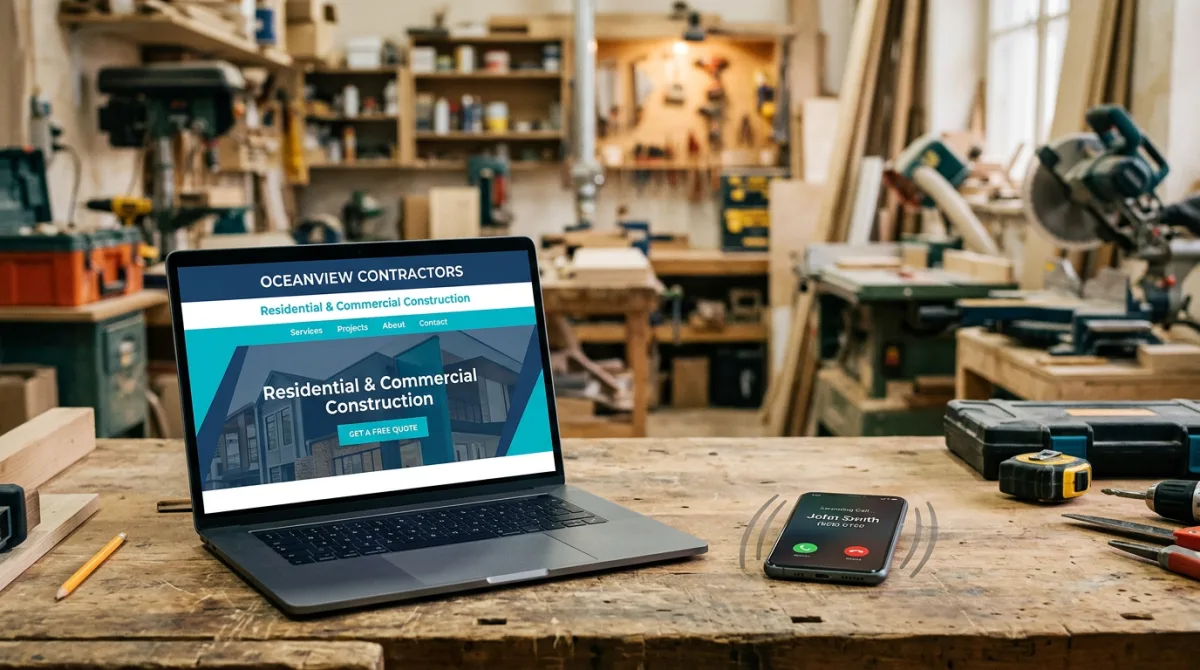
Most contractors know they need a website. Fewer know how to make one that actually brings in work. A contractor website that generates leads isn’t about flashy design or expensive development — it’s about giving potential clients exactly what they need to pick up the phone or fill out a form.
The bar is surprisingly low. Most of your competitors either don’t have a website or have one that was built in 2014 and hasn’t been updated since. A clean, fast, mobile-friendly site with the right information puts you ahead of 80% of the market immediately.
Here’s how to build a contractor website focused on lead generation — even if you’ve never touched a line of code.
Why Your Contractor Website Matters More Than Ever
Homeowners research before they hire. According to industry data, over 85% of consumers check a contractor’s online presence before making contact. If you don’t have a website — or yours looks abandoned — you’re invisible to a huge portion of your potential market.
Your website serves three critical functions:
- Credibility. It proves you’re a legitimate, established business. Homeowners compare contractors side by side, and the one with a professional site wins more often than not.
- Discovery. When someone searches “kitchen remodeler near me” or “plumber in San Antonio,” your website is what shows up in search results — if it’s set up correctly.
- Conversion. A website that’s optimized for contractor lead generation turns visitors into calls, form submissions, and booked jobs.
Your website works 24/7, doesn’t take days off, and costs less per month than a single lead from most pay-per-lead platforms.
The Five Pages Every Contractor Website Needs
You don’t need a 30-page website. You need five solid pages that answer every question a potential client has before they’re ready to call you.
1. Homepage
Your homepage has about 5 seconds to make a first impression. Keep it simple and direct:
- Headline: What you do and where you do it. “Licensed General Contractor Serving the Houston Metro Area” is better than “Welcome to Our Website.”
- Subheadline: Your key differentiator. “Family-owned since 2012. Over 500 projects completed.”
- Clear call to action (CTA): “Get a Free Estimate” with a phone number and form prominently visible — not buried at the bottom.
- Trust signals: License numbers, insurance badges, review ratings, and any certifications.
2. Services Page
List every service you offer with a brief description of each. This matters for both your visitors and search engines. If you do kitchen remodels, bathroom remodels, additions, and deck building — each one should have its own section or sub-page.
Include typical project timelines and general price ranges where possible. Homeowners appreciate transparency, and it pre-qualifies leads so you spend less time on tire-kickers.
3. Portfolio / Gallery
Photos sell. Period. Before-and-after images of completed projects are the single most persuasive element on a contractor website.
Portfolio best practices:
- High-quality photos (smartphone cameras are fine — just clean the lens and shoot in good lighting)
- Organize by project type (kitchens, bathrooms, exteriors, etc.)
- Include brief descriptions: project scope, timeline, and the neighborhood or city
- Update regularly — a portfolio with projects from 2020 doesn’t build confidence in 2026
4. Reviews / Testimonials Page
Dedicate a page to client reviews. Embed your Google reviews directly or curate your best testimonials with client names (first name and last initial is fine) and project details.
Reviews do more than build trust — they directly impact your search rankings. For strategies on generating more reviews, see our guide on getting more 5-star reviews as a service pro.
5. Contact / Quote Page
Make it ridiculously easy to reach you. Your contact page should include:
- A short form: name, phone, email, brief project description, preferred contact method
- Your phone number (clickable on mobile)
- Your service area — list specific cities and neighborhoods
- Your hours and typical response time
Avoid long forms with 10+ fields. Every additional field you add reduces form completions by roughly 10%.
SEO Basics That Drive Contractor Leads
Search engine optimization sounds intimidating, but for local contractors, the basics are straightforward and highly effective.
Keyword targeting:
- Include your service + location on key pages. “Bathroom remodeling in Dallas” is a keyword. Work it naturally into your page titles, headings, and body text.
- Create location-specific pages if you serve multiple cities. A “Plumbing Services in Fort Worth” page ranks better than a generic services page for Fort Worth searchers.
Google Business Profile:
Your Google Business Profile (GBP) is arguably more important than your website for local search. It shows up in map results and local 3-packs. Keep it updated with photos, posts, and accurate business information. Our Google Business Profile guide for contractors covers optimization step by step.
Page speed:
Slow websites lose visitors. Aim for pages that load in under 3 seconds. Compress images, use a fast hosting provider, and avoid bloated website builders loaded with unnecessary features.
Mobile-first design:
Over 60% of home service searches happen on mobile devices. If your site doesn’t look great and function perfectly on a phone, you’re losing more than half your potential leads.
Content That Attracts and Converts
Adding a blog or resources section to your contractor website creates ongoing opportunities to rank for search terms your potential clients use.
Content ideas that generate leads:
- Cost guides: “How Much Does a Kitchen Remodel Cost in Texas?”
- How-to articles: “How to Prepare Your Home for a Bathroom Renovation”
- Comparison content: “Quartz vs. Granite Countertops: Pros, Cons, and Cost”
- Local content: “Best Home Improvement Projects for Houston Homeowners”
Each piece of content should include a clear CTA directing readers to request a quote or call your office.
You don’t need to publish weekly. Even 1–2 quality posts per month adds up. After a year, you’ll have 12–24 pages ranking for different search terms, each one a potential lead source.
For more on building your marketing presence, check out our guide on marketing your contractor business on a budget.
Convert More Visitors Into Leads
Driving traffic to your website is only half the battle. Converting that traffic into actual leads requires intentional design and strategy.
Conversion optimization tips:
- Put your phone number in the header of every page. Make it clickable on mobile.
- Add CTAs throughout your content. Don’t wait until the bottom of the page. Include “Get a Free Estimate” buttons after every major section.
- Use a chat widget or text option. Many homeowners prefer texting over calling. A simple “Text us at (555) 123-4567” can increase inquiries significantly.
- Create urgency without being pushy. “We’re currently booking projects for April — request your estimate today” is effective and honest.
- Add a lead magnet. A free downloadable checklist (“10 Questions to Ask Before Hiring a Remodeler”) in exchange for an email address builds your list for follow-up.
Track What’s Working
You can’t improve what you don’t measure. Set up free tools to understand where your leads come from:
- Google Analytics shows which pages get the most traffic and where visitors come from
- Google Search Console reveals which search terms bring people to your site
- Call tracking numbers let you attribute phone calls to specific marketing channels
- Form submission tracking tells you which pages generate the most quote requests
Review your data monthly. Double down on what’s working and fix or cut what isn’t.
Pair Your Website With the Right Platforms
Your website is your home base, but pairing it with the right platforms amplifies your reach. House Escort lets pros create a profile and connect with homeowners directly — at a low monthly fee with 0% commission on jobs. Unlike pay-per-lead platforms that charge 10–30% or sell you shared leads, you keep every dollar you earn.
Your House Escort profile complements your website by putting you in front of homeowners who are actively searching for your services in your area.
Frequently Asked Questions
How much does it cost to build a contractor website?
A simple, professional contractor website costs $500–$2,000 for a custom build, or $20–$50/month using a website builder like Squarespace or Wix. The investment pays for itself quickly — even one additional lead per month can cover the cost many times over.
Do I really need a website if I get most of my work from referrals?
Yes. Even referral clients will check your website before calling. A professional site reinforces the recommendation they received and gives them the confidence to move forward. It also opens up an entirely new lead channel through search engines.
How long does it take for a contractor website to start generating leads?
Most contractor websites start generating organic search leads within 3–6 months of launch, assuming basic SEO is in place. Paid advertising through Google Ads can generate leads immediately, but organic traffic provides a more sustainable long-term pipeline.
What’s the biggest mistake contractors make with their websites?
Not including a clear call to action on every page. Many contractor websites showcase beautiful work but make it difficult to actually request a quote. Every page should have a visible phone number and a “Get a Free Estimate” button.
Should I hire a web designer or build it myself?
If you’re reasonably comfortable with computers, website builders like Squarespace make it easy to create a professional site yourself. If not, hiring a local web designer for a simple 5-page site is a worthwhile investment. Avoid agencies that charge $10,000+ — you don’t need that level of complexity.
Want to generate leads without building from scratch? Try House Escort free for 1 month — keep 100% of your earnings → houseescort.com/provider