Commercial HVAC Maintenance Cost in Texas: 2026 Guide
House Escort Team
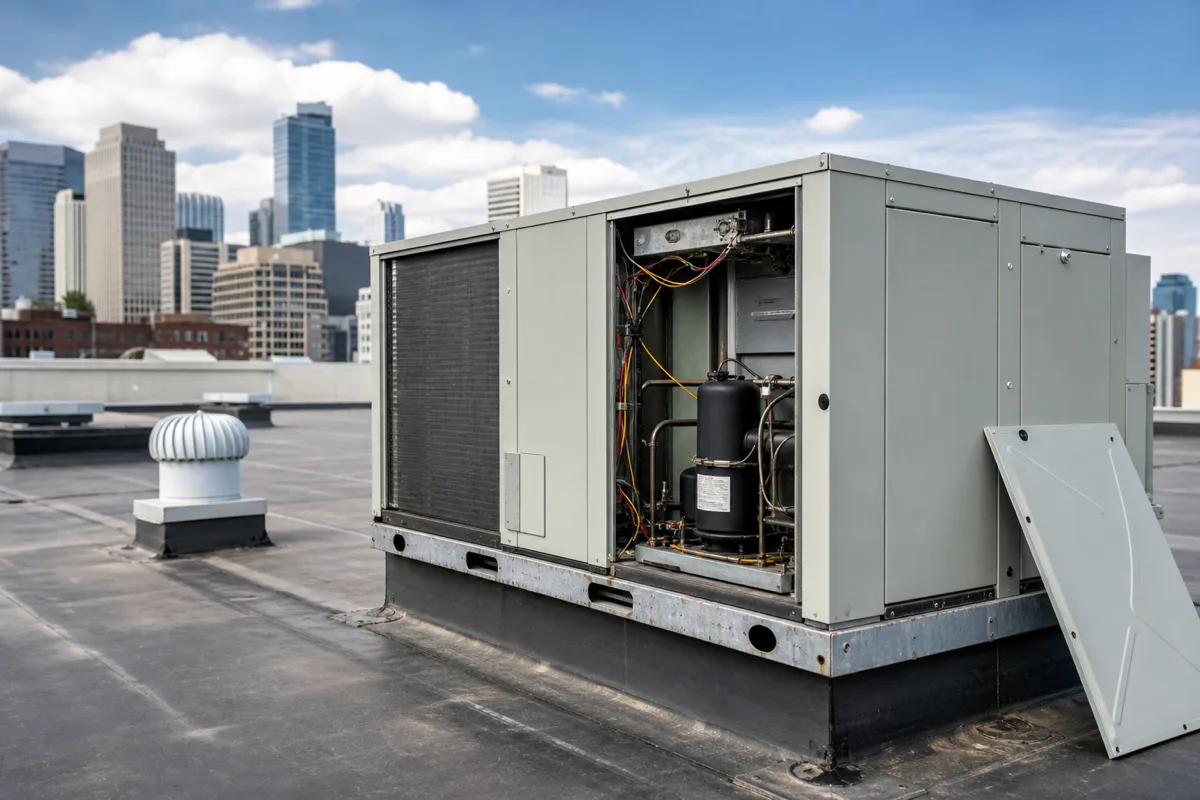
Commercial HVAC maintenance in Texas is a critical operational expense — with summer temperatures regularly exceeding 100°F, an HVAC failure at a retail location, office building, or restaurant can mean lost customers, employee productivity collapse, and expensive emergency repair bills. Understanding what preventive maintenance costs and how maintenance contracts are structured helps facility managers and building owners get the right coverage at competitive pricing.
Commercial HVAC Maintenance Cost Overview
Commercial HVAC maintenance pricing varies significantly based on system type, size, and the scope of the maintenance contract. General pricing benchmarks for Texas:
Per-unit annual maintenance (basic PM visit):
- Small rooftop unit (2–5 ton RTU): $150–$350 per visit
- Medium RTU (7.5–12.5 ton): $250–$500 per visit
- Large RTU (15–30 ton): $400–$800 per visit
- Chiller (100–200 ton): $1,500–$3,500 per visit
- Cooling tower (standalone inspection): $500–$1,500 per visit
Annual maintenance contract pricing: Most Texas commercial buildings purchase annual PM contracts covering 2–4 preventive maintenance visits per year:
- Small retail/office (2–4 RTUs, 5–10 ton each): $2,000–$5,000/year
- Mid-size building (4–8 RTUs): $4,000–$10,000/year
- Large commercial (10+ RTUs or mixed mechanical): $10,000–$40,000+/year
Contracts with priority emergency response, parts coverage, or labor coverage for repairs are priced higher than inspection-only agreements.
What a Commercial HVAC PM Visit Includes
A thorough preventive maintenance visit for a rooftop unit should include:
Electrical systems:
- Measure and record supply/return temperatures
- Check electrical connections (tighten if needed)
- Measure amperage draw on compressors and motors (compare to nameplate)
- Check capacitors and contactors for wear
- Test high- and low-pressure safety controls
- Check economizer controls if applicable
Refrigerant system:
- Check refrigerant pressures (and leak check if indicated)
- Inspect coils for dirt, damage, or icing
- Check expansion valve operation
Mechanical:
- Inspect and lubricate bearings as designed
- Check belt condition and tension (on belt-drive units)
- Inspect drain pan and condensate drain lines (critical in Texas humidity)
- Check economizer dampers and actuators
Filters and air quality:
- Inspect or replace filters (may be additional charge depending on contract)
- Check for unusual odors or visible contamination
Documentation:
- Service report with all readings, findings, and photos
- Recommendations for needed repairs before they become failures
Good PM service includes a written report with specific readings — not just a sign-off that “everything looks good.”
Types of Commercial HVAC Contracts in Texas
Inspection-only contract: Technician visits for PM checks and identifies issues but does not include repair labor or parts. Owner pays for any needed repairs separately. Lowest contract cost; highest total cost if issues are found frequently.
Preventive maintenance + labor contract: PM visits plus covered labor hours for minor repairs during maintenance visits. No coverage for major component failures (compressors, coils, heat exchangers). Moderate cost.
Full-coverage maintenance agreement: PM visits + priority emergency service + labor + parts coverage for mechanical failures. Most expensive but most predictable — converts HVAC from a variable to a fixed operating expense. Most appropriate for high-priority commercial applications (data centers, restaurants, medical facilities) where downtime cost is high.
Texas Commercial HVAC Seasonal Timing
Texas’s climate creates a specific PM timing strategy:
- Spring PM (March–April): Pre-cooling season check before peak demand. This is the most critical visit — catching issues before the first 100°F day rather than during it.
- Fall PM (October–November): Post-cooling season check and transition to heating mode inspection. Also covers any wear accumulated during the brutal Texas summer.
For critical applications (restaurants, medical, data centers), a third summer mid-season check (July) is advisable to catch developing issues before peak demand.
What Texas Commercial Buildings Skip (and Shouldn’t)
Coil cleaning: Condenser coil fouling from Texas dust and debris significantly reduces efficiency and system capacity. Most standard PM visits include a visual coil inspection but not a thorough chemical cleaning — which requires additional time and chemistry. Neglected condenser coils can reduce system efficiency by 20%–30% and shorten compressor life. Request coil cleaning as a specific service item annually.
Condensate drain management: Texas humidity creates significant condensate volume. Blocked drains cause water damage, mold, and ceiling collapse in commercial buildings. Quarterly drain inspection and treatment (pan tablets or biocide) is a low-cost, high-value service that many contracts omit.
Economizer calibration: Texas commercial buildings with economizers (economizers use outdoor air for free cooling) often have malfunctioning economizers that run the HVAC in mechanical cooling mode even when outdoor conditions would allow free cooling. A calibrated economizer saves meaningful energy cost. Testing and adjusting economizers is not always included in basic PM contracts.
Finding Commercial HVAC Service in Texas
House Escort connects Texas commercial property managers and building owners with HVAC contractors who specialize in commercial maintenance contracts.
Find a Commercial HVAC Contractor →
Frequently Asked Questions
How often should commercial HVAC be serviced in Texas?
Twice annually (spring pre-cooling and fall post-cooling) is the minimum standard for Texas commercial HVAC. High-priority applications (restaurants, medical, data centers, 24/7 retail) benefit from quarterly or monthly service to minimize downtime risk. Each PM visit should include comprehensive system checks and documentation.
What is typically covered in a commercial HVAC maintenance contract?
Contract coverage varies significantly — from inspection-only (PM visits only; repairs billed separately) to full-coverage (PM visits + emergency response + labor + parts). Most Texas commercial HVAC contracts are inspection-plus-labor — PM visits and covered labor for repairs discovered during those visits, with major components (compressors, heat exchangers) billed separately. Read the contract terms carefully to understand exactly what is and isn’t covered.
How much can preventive maintenance reduce HVAC repair costs?
Industry data consistently shows that equipment with regular preventive maintenance has 30%–50% lower repair costs and significantly longer service life than equipment that is only serviced reactively. For Texas commercial buildings where HVAC replacement costs run $3,000–$15,000+ per rooftop unit, extending equipment life by 3–5 years through proper maintenance represents significant capital expense deferral.
What should a Texas commercial HVAC contractor include in a PM report?
A PM report should include: system identification (building, unit number, location), all measured readings (supply/return temps, refrigerant pressures, amperage draws, filter pressure drop), findings and observations with photos, recommended repairs or replacements, and technician signature and date. Generic reports that say “inspected — OK” without specific measurements are not acceptable documentation for commercial maintenance.