Finding Home Repair Contractors in Alaska
House Escort Team
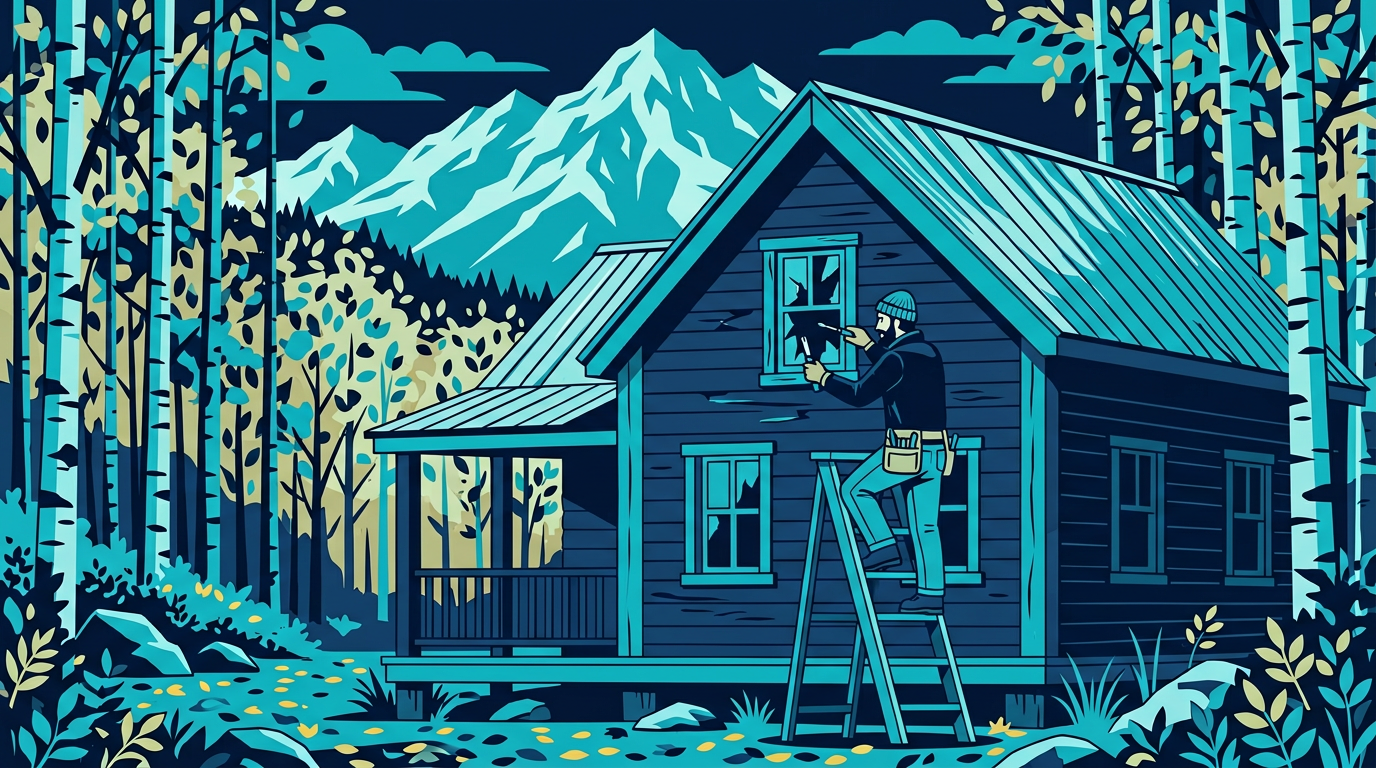
Finding a reliable home repair contractor in Alaska is harder than in the lower 48. The contractor pool is smaller, the operating season is compressed by weather, labor costs are higher due to cost of living and supply chain realities, and the unique challenges of Alaska construction — permafrost foundations, extreme cold weather performance, high heating loads, and wildfire risk in certain areas — require contractors with genuine Alaska experience.
These challenges make vetting even more important. A contractor who worked primarily in Seattle and recently moved to Anchorage may not understand the Alaska-specific details that determine whether a job holds up through five years of freeze-thaw cycles.
Why Alaska Home Repair Is Different
Compressed construction season. For exterior work, the effective season in Anchorage runs roughly May through September, with some extension into October for experienced crews. In Interior Alaska (Fairbanks, North Pole, Delta Junction), exterior work is even more seasonal. This creates significant demand compression — good contractors fill their schedules early, and homeowners who wait until June or July for an exterior project often cannot get scheduled until fall.
Material costs. Building materials in Alaska cost 20–40% more than comparable materials in the Pacific Northwest due to shipping costs (barge to Anchorage and Fairbanks, air freight to remote communities). Labor costs reflect Alaska’s cost of living, which runs approximately 25% above the national average according to the Missouri Economic Research and Information Center index.
Alaska-specific performance requirements. Insulation R-values, foundation approaches, heating system specifications, and window performance requirements in Alaska exceed lower-48 standards significantly. A contractor unfamiliar with Alaska Energy Code requirements may install products that are code-compliant in the lower 48 but undersized for Alaska’s climate zone requirements (most of Alaska is Climate Zone 7 or 8 — the two most demanding classifications).
Remote access. Outside Anchorage, the Mat-Su Valley, and Fairbanks, many Alaska properties have limited or seasonal road access, require fly-in or boat-in logistics for materials, and may involve lodging costs for contractor crews. These logistics add significantly to project costs and limit the contractor pool.
Types of Home Repair Work in Alaska
Foundation and structural work. In permafrost areas (primarily Interior Alaska and rural communities), foundation work requires specialized knowledge of thermal piling, adjustable supports, and permafrost mitigation. In Southcentral Alaska, foundations are typically full basement or crawlspace — concrete contractors here should understand seismic requirements (Anchorage is in a Zone 4 seismic area).
Roofing. Alaska’s extreme temperature ranges, heavy snow loads (Anchorage design load is 40 psf, some areas higher), and UV exposure create demanding conditions for roofing materials. Metal roofing is widely used in Alaska because of its snow shedding properties and longevity in freeze-thaw conditions. Contractors should understand ice dam prevention and proper vapor barrier installation.
Heating systems. Most Alaska homes use oil furnaces, natural gas (where available), or heat pumps (increasingly viable in Southcentral). Boiler systems with radiant floor heating are popular in well-built newer homes. HVAC contractors in Alaska should be familiar with cold-climate heat pump performance, oil furnace maintenance, and HRV (Heat Recovery Ventilator) systems that manage indoor air quality in tightly sealed Alaska homes.
Windows and insulation. Alaska Energy Code requires triple-pane windows in most climate zones and high insulation levels (R-60 ceiling, R-30 wall in Climate Zone 7). Contractors who install windows or insulation must be familiar with Alaska Energy Code requirements and proper air sealing to prevent moisture problems in extreme cold.
How to Find and Vet Alaska Contractors
Start with local referrals. Alaska’s contractor community is small enough that reputation travels fast. Ask neighbors who have had recent work done, post in local Facebook groups (Anchorage Community, Mat-Su Valley Homeowners, etc.), or ask at the local lumber yard who they see buying materials regularly. Established contractors at the lumber yard are usually active and reliable.
Verify the contractor’s license. Alaska contractor licensing is managed by the Alaska Department of Commerce, Community, and Economic Development (DCCED). Verify any contractor’s license at the Alaska Professional Licensing Portal. General contractors, specialty contractors, and mechanical contractors all require state licensing. There is no unlicensed work exception for most residential trades.
Confirm insurance. Require a certificate of insurance showing general liability coverage and workers’ compensation if the contractor has employees. Alaska has a high rate of independent contractors and sole operators — verify that the worker on your project has coverage. A worker injured on your property without coverage can result in significant personal liability.
Ask Alaska-specific questions. Before hiring any contractor for exterior work or major system work, ask:
- How long have you been working in Alaska specifically?
- Have you done similar work in this climate zone?
- Are you familiar with Alaska Energy Code requirements for this type of project?
- Who are your local material suppliers? (Established contractors have supplier relationships; fly-by-night operators often do not.)
Timing matters. For spring and summer exterior projects, start getting quotes in February or March. The best Anchorage contractors have full schedules by April. If you need a roofing, siding, or exterior foundation project completed before winter, waiting until May often means an August start or being pushed to the following year.
House Escort in Alaska
House Escort connects Alaska homeowners with local professionals across home repair, maintenance, and improvement. Browse available professionals and request quotes directly — no commission taken, which means competitive rates and more take-home pay for Alaska contractors.
For more homeowner guidance, see our home renovation project management tips and HVAC maintenance checklist for homeowners.
Frequently Asked Questions
How much does home repair cost in Alaska compared to the lower 48?
Home repair labor in Alaska typically runs 25–40% above comparable work in Pacific Northwest markets like Seattle or Portland. Material costs run 20–40% higher due to shipping to Anchorage and significantly more for remote communities. A kitchen remodel that costs $40,000 in Seattle may cost $55,000–$65,000 in Anchorage and $80,000–$100,000 in a smaller Alaska community with limited road access.
Do contractors in Alaska need to be licensed?
Yes — Alaska requires licensing for general contractors, specialty contractors (electrical, plumbing, mechanical, HVAC), and most other construction trades. Licensing is managed by the Alaska Department of Commerce, Community, and Economic Development (DCCED). Homeowners can verify any contractor’s license at the Alaska Professional Licensing Portal. Working with an unlicensed contractor can void your homeowners insurance coverage for work-related claims and leaves you without formal recourse if quality issues arise.
When is the best time to schedule exterior home repairs in Alaska?
For exterior work in Southcentral Alaska (Anchorage area), the optimal window is May through September. Start getting quotes in February or March to secure a spot with quality contractors before the summer rush. For Interior Alaska (Fairbanks area), the usable exterior season is shorter — June through August for most work. Winter projects are typically limited to interior work, heating system repairs, and emergency structural repairs.
What is the Alaska Energy Code and why does it matter for home repair?
The Alaska Energy Code establishes minimum insulation R-values, window performance specifications, and mechanical system efficiency requirements for Alaska’s climate zones. Most of Alaska falls in Climate Zone 7 or 8, which have the most demanding requirements in the U.S. Energy Code. Contractors performing insulation, window, or heating system work must meet these standards or you may fail a building inspection. Energy-code-compliant work also protects your heating costs — undersized insulation in Alaska means proportionally large heating bill increases.
How do I find a contractor for remote property repair in Alaska?
For properties outside road-accessible areas, identify contractors in the nearest hub community (Bethel, Kodiak, Nome, Dillingham) with experience in fly-in project logistics. Expect significant mobilization costs for fly-in material and crew logistics. In many rural communities, the pool of qualified contractors is very limited — the Alaska Rural Development Housing Program and regional Native corporations sometimes have contractor referral resources. Plan one to two construction seasons ahead for major remote property work.