AC Repair Cost in Texas: 2026 Guide
House Escort Team
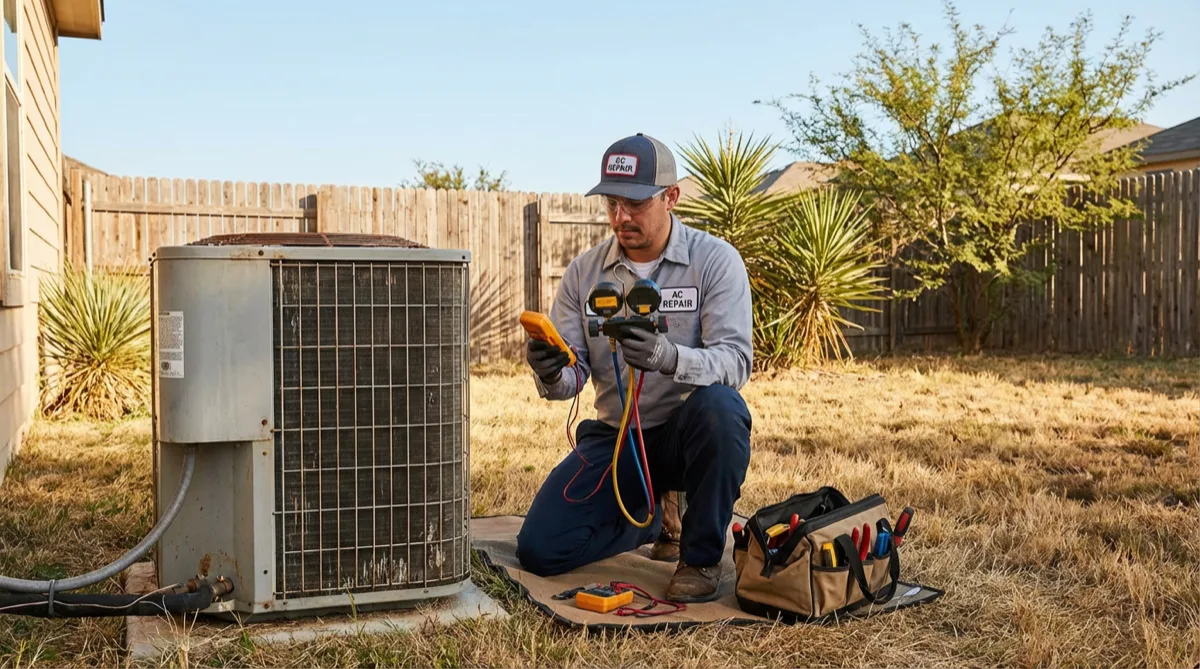
Texas summers are not forgiving. When your air conditioner fails in July with temperatures above 100°F, getting it fixed fast isn’t optional — it’s a health and safety issue. Understanding AC repair costs before you need emergency service helps you make faster, better decisions when it matters most.
This guide covers what AC repairs actually cost in Texas, which problems are worth fixing vs. replacing, and how to avoid overpaying.
Average AC Repair Costs in Texas
The cost of AC repair varies significantly by what’s actually broken. Minor repairs and tune-ups run under $500; major component replacements push $1,000–$4,000.
Common AC Repairs and Costs
| Repair | Average Texas Cost |
|---|---|
| Refrigerant recharge (per pound, R-410A) | $100–$175 |
| Refrigerant recharge (per pound, R-22 legacy) | $175–$350+ |
| Refrigerant leak detection and repair | $200–$600 |
| Capacitor replacement | $150–$400 |
| Contactor replacement | $150–$350 |
| Blower motor replacement | $400–$1,200 |
| Evaporator coil replacement | $800–$2,500 |
| Condenser coil replacement | $1,000–$3,500 |
| Compressor replacement | $1,500–$4,500 |
| Thermostat replacement | $150–$400 |
| Condensate drain line cleaning | $75–$200 |
| Fan motor replacement | $400–$1,000 |
| Circuit board replacement | $400–$1,200 |
Diagnostic fee: Most Texas HVAC companies charge a service/diagnostic fee of $75–$150 for a technician visit, usually applied toward the repair if you proceed. Emergency calls (evenings, weekends, holidays) typically carry a premium of $50–$150 over the standard rate.
Full AC System Replacement Costs
If repair costs exceed 50% of replacement cost, or the system is over 12–15 years old, replacement is often the better financial decision.
Average AC replacement costs in Texas (equipment + installation):
- 2-ton unit: $4,500–$7,500
- 3-ton unit: $5,500–$9,000
- 4-ton unit: $6,500–$10,500
- 5-ton unit: $8,000–$13,000
Prices vary by brand, efficiency (SEER2 rating), and installation complexity. High-efficiency units (18+ SEER2) cost more upfront but reduce electricity bills year-over-year.
What Drives Texas AC Repair Costs
Seasonal demand: Texas AC repair demand spikes in May–August. During peak season, HVAC companies are booked out 3–7 days, and emergency service carries premium pricing. Getting your AC serviced in March or April — before peak demand — can save $100–$300 on the same services and get faster scheduling.
R-22 refrigerant: Older systems using R-22 (phased out under EPA regulations) now require recycled refrigerant, which is significantly more expensive than the R-410A in modern systems. If your system uses R-22 and needs a refrigerant recharge, evaluate whether replacement makes more sense than paying R-22 rates.
Houston vs. other markets: Houston HVAC repair costs run slightly higher than other Texas cities due to concentration of demand, the industrial labor market, and higher average wages. Dallas and Austin are comparable; San Antonio and smaller markets run somewhat lower.
Age of system: Systems over 10 years old are more likely to need multiple repairs in a short period. A $400 capacitor repair on a 7-year-old unit is reasonable; the same repair on a 15-year-old unit may just precede another failure.
Repair vs. Replace: How to Decide
Use this rule of thumb: if repair cost exceeds 50% of a new system’s installed price, replacement is usually the better investment.
| Scenario | Recommended Action |
|---|---|
| System is <10 years old, repair <$500 | Repair |
| System is <10 years old, repair $500–$1,500 | Get a second opinion; evaluate efficiency gap |
| System is 10–15 years old, repair <$800 | Repair, but budget for replacement in 3–5 years |
| System is 10–15 years old, repair >$1,000 | Evaluate replacement costs; may be better to replace |
| System is 15+ years old, any major repair | Replace — parts availability and efficiency gains favor new unit |
Also consider: a new system in Texas typically saves $200–$600/year in electricity costs compared to a 15-year-old system at original SEER rating. A $7,000 replacement that saves $400/year pays back in 17.5 years — but you’re also buying 15+ years of reliability and manufacturer warranty.
How to Hire a Reliable HVAC Tech in Texas
- Verify TDLR license: Texas HVAC contractors must be licensed by the Texas Department of Licensing and Regulation. Verify at license.tdlr.texas.gov before hiring.
- Get itemized estimates: A written estimate with parts (model numbers) and labor broken out separately protects you from inflated charges.
- Ask about refrigerant by weight: Refrigerant is sold by the pound — ask how many pounds the system holds and how many were added. Some technicians overcharge by adding unnecessary refrigerant.
- Service agreement value: Many HVAC companies offer maintenance agreements ($150–$300/year) covering annual tune-ups and priority scheduling. For Texas homeowners, a spring A/C tune-up before peak season has real ROI in avoiding peak-season emergency calls.
Find trusted HVAC professionals in Texas through House Escort — vetted pros, no commissions, free for homeowners.
For related cost guides, see Whole House Generator Cost in Texas and Attic Insulation Cost in Texas — two upgrades that reduce AC load and improve system efficiency.
Frequently Asked Questions
Why is AC repair so expensive in Texas in summer?
Demand far outstrips supply during Texas summer heat events — HVAC companies may have 3–7 day backlogs, and technicians are working extended hours. Emergency service premiums apply for after-hours calls. This seasonal premium reflects real labor scarcity. Getting routine maintenance done in March-April avoids peak-season rates.
How often should I service my AC in Texas?
Annual service is the minimum for Texas homeowners. Given the extreme demand Texas heat puts on cooling systems — running continuously for 6+ months — most HVAC professionals recommend servicing your system in spring before cooling season begins. A tune-up (clean coils, check refrigerant, inspect capacitors, clear condensate drain) runs $100–$200 and can prevent mid-summer failures.
What are signs my AC needs repair in Texas?
Common signs: warm air from vents when cooling is running, reduced airflow, ice on the refrigerant lines or indoor unit, frequent short cycling (system turns on and off rapidly), unusual sounds (grinding, squealing, banging), musty smells (indicating mold in the drain pan or ducts), and electric bills significantly higher than prior years at same thermostat settings.
Is R-22 refrigerant still available in Texas?
R-22 is still available but expensive — the EPA phased out new R-22 production in 2020, so only recycled/reclaimed R-22 exists. If your older system needs an R-22 recharge, expect to pay $175–$350/lb vs. $100–$175/lb for R-410A. Given the high cost of R-22 service and the system’s likely age, replacement is often more economical.
Can I repair my own AC in Texas?
Homeowners can replace air filters, clear condensate drain lines (common clog point), and check thermostat batteries. Any refrigerant work requires EPA 608 certification — it’s illegal for unlicensed individuals to purchase or handle regulated refrigerants. Electrical component replacement (capacitors, contactors) is technically DIY-possible but involves working with high-voltage components; most homeowners are better served by a licensed tech for safety and warranty protection.